Normal Isn’t Coming Back Jesus
A Designer’s First Look: Bold, Quiet, and Unavoidably Human
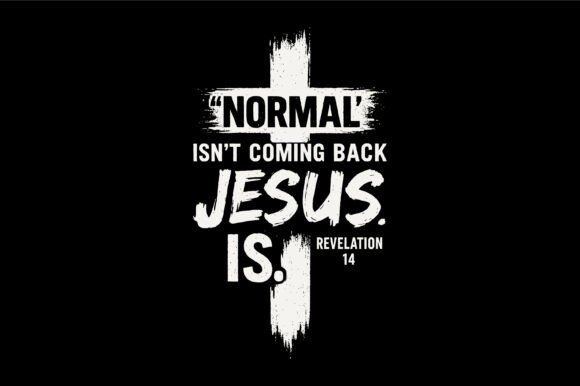
When Normal Isn’t Coming Back Jesus landed in my inbox, I paused—not because it’s flashy, but because it lands with weight. It’s not a shout; it’s a held breath before a quiet confession. As an embroidery designer who’s stitched thousands of phrases onto tees, totes, and baby onesies, I immediately scanned its rhythm: clean letterforms, intentional spacing, no ornamental flourishes. The phrase itself carries emotional gravity—spiritual, reflective, gently defiant—and the design honors that by staying grounded. No halos, no doves, no decorative crosses. Just words, arranged with reverence for negative space and legibility. That tells me this isn’t meant for novelty mugs or ironic socks. It belongs on something worn close: a soft sweatshirt for Sunday mornings, a linen tea towel in a thoughtful kitchen, or a minimalist patch sewn onto a denim jacket.
Where It Lives Best: Real Projects, Real People
I tested Normal Isn’t Coming Back Jesus as part of a small-batch run of unisex cotton-blend sweatshirts for a local faith-based community shop. Why sweatshirts? Because they offer stability—less stretch than t-shirts, more surface than caps—and let the phrase settle without visual competition. It read clearly at 4.5 inches wide, centered on the chest. No crowding, no awkward truncation. On a natural-toned tote bag? Equally strong. The letters have enough body to hold up in fill stitch without looking muddy, and the spacing prevents thread nesting between characters—a common headache with tightly kerned script designs.
It also translated well to a baby blanket edge (using a simplified 3.2-inch version), where softer satin-stitched outlines kept the sentiment tender rather than stark. For Etsy sellers listing personalized gifts, this is gold: it’s meaningful without being prescriptive, reverent without being exclusive. A customer ordering it for a graduation gift or a “new chapter” milestone doesn’t need explanation—they feel the resonance.
Where Caution Is Warranted: Fabric, Form, and Function
That said, Normal Isn’t Coming Back Jesus isn’t universally forgiving. On thin, lightweight t-shirts—especially ring-spun cotton—it needs extra stabilizer support. Without it, the fill stitch can pull or shadow through. I saw minor puckering on a dark heather tee until I swapped to medium-cutaway + tear-away combo. On highly textured fabrics like bouclé or thick terry cloth? The letterforms softened slightly at edges—still legible, but less crisp. Not a dealbreaker, but worth noting if you’re marketing high-end embroidered aprons or boutique pillow covers where precision matters.
Caps and curved surfaces are trickier. The phrase’s horizontal flow doesn’t wrap well over crown seams, and small hoop sizes (under 4 inches) risk compressing the spacing, making “Isn’t” and “Coming” visually crowded. I’d skip it for structured baseball caps unless resizing and re-spacing manually. Likewise, avoid dense decorative accents around it—this design earns its impact through restraint. Adding swirls or borders undercuts its quiet authority.
Stitch Behavior You’ll Actually Notice
- Satin stitch areas (like serifs or subtle terminals) hold shape cleanly on stable fabrics—but test thread tension first. Low-tension runs caused slight fraying on lighter threads during my first run.
- Fill stitch density feels balanced: dense enough for opacity on mid-tone fabrics, breathable enough to avoid stiffness on baby items.
- Running stitch elements (if used in alternate versions) would work beautifully for hand-embroidered tea towels or linen napkins—but verify whether your file includes those variants before assuming.
What It Does for Your Craft Business—Beyond the Stitch
This isn’t just another T-Shirt Designs download. Normal Isn’t Coming Back Jesus elevates perceived value because it invites pause. Customers don’t glance and scroll—they stop. That builds trust. When someone buys a handmade product featuring this phrase, they’re not just buying apparel—they’re aligning with intention. For Etsy sellers, that translates to higher conversion on listings with thoughtful context (“for moments of transition,” “gentle reminder for uncertain seasons”). For small shop owners building boutique branding, it reinforces authenticity without cliché.
It also photographs exceptionally well in printable mockups—no glare, no detail loss in shadows. That means stronger thumbnails, cleaner social posts, and better engagement across digital storefronts. And yes, it reads clearly in black-and-white mockups, which is essential when prepping for print catalogs or wholesale line sheets.
Designer-to-Designer Notes Before You Stitch
- Always test Normal Isn’t Coming Back Jesus on scrap fabric matching your final project’s weight and stretch.
- Check thread color contrast early—especially on dark or heathered backgrounds. A charcoal gray thread on navy can disappear; off-white pops cleanly on deep tones.
- Review stitch density in your embroidery software. If it feels heavy for delicate items (like baby onesies), consider reducing fill density by 10–15%.
- Confirm hoop size compatibility. At standard scale, it fits comfortably in a 5x7 hoop—but verify before hooping expensive garments.
- Inspect tiny details: apostrophes, crossbars in “A” and “H,” and terminal points. These define clarity.
- Test both light and dark fabric backgrounds in mockups—not just for contrast, but for emotional tone. It reads differently on cream versus charcoal.
- Use appropriate stabilizer: cutaway for knits, tear-away for stable wovens, fusible for lightweight linens.
- Double-check licensing terms before selling finished products or bundling it into digital embroidery bundles. This phrase carries cultural weight—commercial use requires clarity.
The Last Stitch
Normal Isn’t Coming Back Jesus won’t win awards for flashiness—and it shouldn’t. Its strength is in its stillness, its honesty, its refusal to soften the message. Used thoughtfully, it becomes more than a machine embroidery design. It becomes a quiet companion on a sweatshirt sleeve, a grounding phrase on a kitchen towel, a dignified statement on a custom embroidered patch. For designers, crafters, and creative entrepreneurs who value meaning alongside method, it’s not just usable—it’s necessary.